MemoHoney Official Website › Choosing A Memory Supplement
Choosing A Memory SupplementChoosing a Memory Supplement: Seven Questions to Ask Any Label
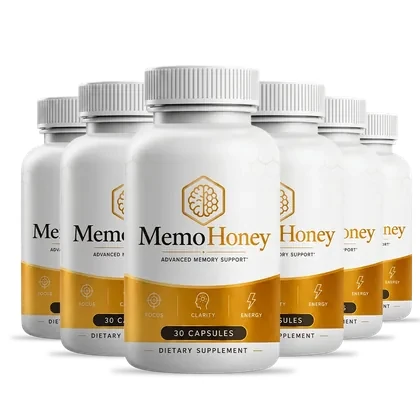
Most memory supplements fail on the same three points, and all three are visible on the packaging before you buy. This guide sets out seven questions, in the order worth asking them, and then runs them against the product this website sells so you can see where it scores badly as well as well.
Written to be used on any bottle in this aisle, including the ones sold by somebody else. The method is more useful than the verdict.
Question one: where are the amounts?
Turn the bottle over and find the Supplement Facts panel. It is a regulated format: a serving size, a list of ingredients, an amount per serving, and a percent Daily Value where one exists. Read the amount column first, before the front of the bottle and before anything a website says.
Three things can go wrong here. The panel can be absent, which is unusual and tells you the comparison cannot be made from the packaging at all. The amounts can be hidden inside a proprietary blend, which gives a total for several ingredients and no figure for any of them. Or the amounts can be there and be small, which at least lets you do arithmetic.
The third is the best case even when the numbers are disappointing, because a small printed number is information and a missing number is not.
Question two: what did the trials actually use?
Every ingredient worth putting in a capsule has a literature, and that literature used a quantity. Find it before you decide whether the label's quantity is interesting.
This is easier than it sounds. Search the ingredient name on PubMed with the word randomized, open two or three abstracts, and read the methods sentence. For citrulline you will find 8.8 grams a day. For arginine alpha-ketoglutarate, 12 grams a day. For beta-alanine, 3.2 to 6.4 grams. For ginkgo, 120 mg twice a day.
Now compare. A capsule holds a few hundred milligrams of powder in total. An ingredient whose trials ran in grams cannot be at trial strength in a capsule that also holds five other things, and no amount of confident packaging changes that arithmetic.
Question three: is this a deficiency argument or an enhancement argument?
Vitamins and minerals behave differently from botanicals and amino acids, and conflating the two is the most common error in this aisle.
A deficiency argument says: you may be short of this, being short of it is bad, topping it up fixes the shortage. That is true of niacin, where genuine deficiency causes pellagra and its third classical symptom is dementia. It is a strong argument for adequacy and a weak one for excess, which is why an upper intake level exists at 35 mg a day for supplemental niacin.
An enhancement argument says: this does something useful, more of it does more. That is the claim behind most botanicals and most amino acids, and it needs a trial rather than a mechanism. COSMOS-Web is what an enhancement argument looks like when somebody actually tests it: thousands of older adults, a placebo, a defined memory instrument and a modest positive result.
Question four: which emblems mean anything?
| Emblem | What it covers | What it does not |
|---|---|---|
| GMP certified | An audit of how a facility runs and records its processes | Anything about the contents of your bottle |
| FDA registered facility | A filing every food and supplement plant must make | Approval. The agency does not approve dietary supplements |
| Made in the USA | Where it was filled and packed | Where the raw ingredients were manufactured |
| Non-GMO, natural, gluten free | Formulation and sourcing claims | A published test, unless one is offered |
| Doctor formulated | Nothing checkable unless a clinician is named | Any specific contribution, date or qualification |
| Third-party tested | Potentially a great deal, if a certificate is released | Anything at all if the certificate is never shown |
Sorted this way, most emblem grids shrink dramatically. The question to ask of any emblem is simple: what document sits behind it, and can I see it?
Questions five, six and seven
Five: what does the refund window actually cover?
Read three things: how long, counted from when, and who pays return postage. A window counted from purchase is shorter than one counted from delivery, and a seller asking for thirty days of use before a claim has narrowed it further. Work out the decision time that is genuinely left before choosing a pack size.
Six: is there a human being at the other end?
A telephone number that a person answers is worth more than an elaborate FAQ. Test it before buying rather than after: ask what is in a capsule. The answer, or the absence of one, tells you what a refund conversation will be like.
Seven: what is the cheapest way to find out you were wrong?
Almost every ladder in this aisle is priced to push you to the largest pack. Work out which rung fits inside the refund window and treat everything beyond it as a commitment made before any evidence arrives. For most people the smallest or the middle rung is the right first purchase.
Running the seven questions on this product
| Question | How MemoHoney scores | Comment |
|---|---|---|
| Where are the amounts? | Badly | No Supplement Facts panel in the supplied artwork, so the amount column cannot be read at all |
| What did the trials use? | A long way above capsule scale | Five of six ingredients studied at 2.4 to 12 grams a day of one compound |
| Deficiency or enhancement? | Mixed, and honestly so | Niacin is a deficiency argument with a ceiling. The other five are enhancement arguments |
| Which emblems mean anything? | One of ten | The money-back mark, which a buyer can test. The other nine are process or formulation claims |
| What does the window cover? | Well | Sixty days from purchase, stated plainly, with a thirty-day use request and buyer-paid return postage |
| Is there a human? | Yes | A telephone order desk, which is more than much of this category offers |
| Cheapest way to be wrong? | Two bottles | $158 for sixty mornings, which matches the refund window exactly |
Two clear failures, two clear passes and three mixed. That is a more useful verdict than a score out of ten, and it is arrived at with the same seven questions any other bottle would get.
The honest conclusion is that this product does well on the commercial questions and badly on the disclosure ones. Whether that trade is acceptable is a decision rather than a fact, and it is one a reader is better equipped to make with the seven questions than without them. The ingredients page carries the working for the second row.
Sources for this guide
- Li A, Li H, Chen J. The effects of L-citrulline supplementation on cerebrovascular function during sprint interval training in taekwondo athletes. J Exerc Sci Fit. 2025;23(3):222-228. PMID 40474881. https://pubmed.ncbi.nlm.nih.gov/40474881/
- Campbell B, Roberts M, Kerksick C, et al. Pharmacokinetics, safety, and effects on exercise performance of L-arginine alpha-ketoglutarate in trained adult men. Nutrition. 2006;22(9):872-81. PMID 16928472. https://pubmed.ncbi.nlm.nih.gov/16928472/
- Saunders B, Elliott-Sale K, Artioli GG, et al. β-alanine supplementation to improve exercise capacity and performance: a systematic review and meta-analysis. Br J Sports Med. 2017;51(8):658-669. PMID 27797728. https://pubmed.ncbi.nlm.nih.gov/27797728/
- DeKosky ST, Williamson JD, Fitzpatrick AL, et al. Ginkgo biloba for prevention of dementia: a randomized controlled trial. JAMA. 2008;300(19):2253-62. PMID 19017911. https://pubmed.ncbi.nlm.nih.gov/19017911/
- Minto C, Vecchio MG, Lamprecht M, et al. Definition of a tolerable upper intake level of niacin: a systematic review and meta-analysis of the dose-dependent effects of nicotinamide and nicotinic acid supplementation. Nutr Rev. 2017;75(6):471-490. PMID 28541582. https://pubmed.ncbi.nlm.nih.gov/28541582/
- Yeung LK, Alschuler DM, Wall M, et al. Multivitamin Supplementation Improves Memory in Older Adults: A Randomized Clinical Trial. Am J Clin Nutr. 2023;118(1):273-282. PMID 37244291. https://pubmed.ncbi.nlm.nih.gov/37244291/
- Cohen PA, Avula B, Khan I. The unapproved drug centrophenoxine (meclofenoxate) in cognitive enhancement dietary supplements. Clin Toxicol (Phila). 2022;60(10):1156-1158. PMID 35959800. https://pubmed.ncbi.nlm.nih.gov/35959800/
- Using Dietary Supplements Wisely. National Center for Complementary and Integrative Health, National Institutes of Health. https://www.nccih.nih.gov/health/using-dietary-supplements-wisely
- Questions and Answers on Dietary Supplements. U.S. Food and Drug Administration. https://www.fda.gov/food/information-consumers-using-dietary-supplements/questions-and-answers-dietary-supplements
- Niacin: Fact Sheet for Health Professionals. Office of Dietary Supplements, National Institutes of Health. https://ods.od.nih.gov/factsheets/Niacin-HealthProfessional/